

UQ Delegation Visits International School of Technology and Management of Feng Chia University, Engaging with Students and Parents of the Electrical Engineering Program to Strengthen International Collaboration
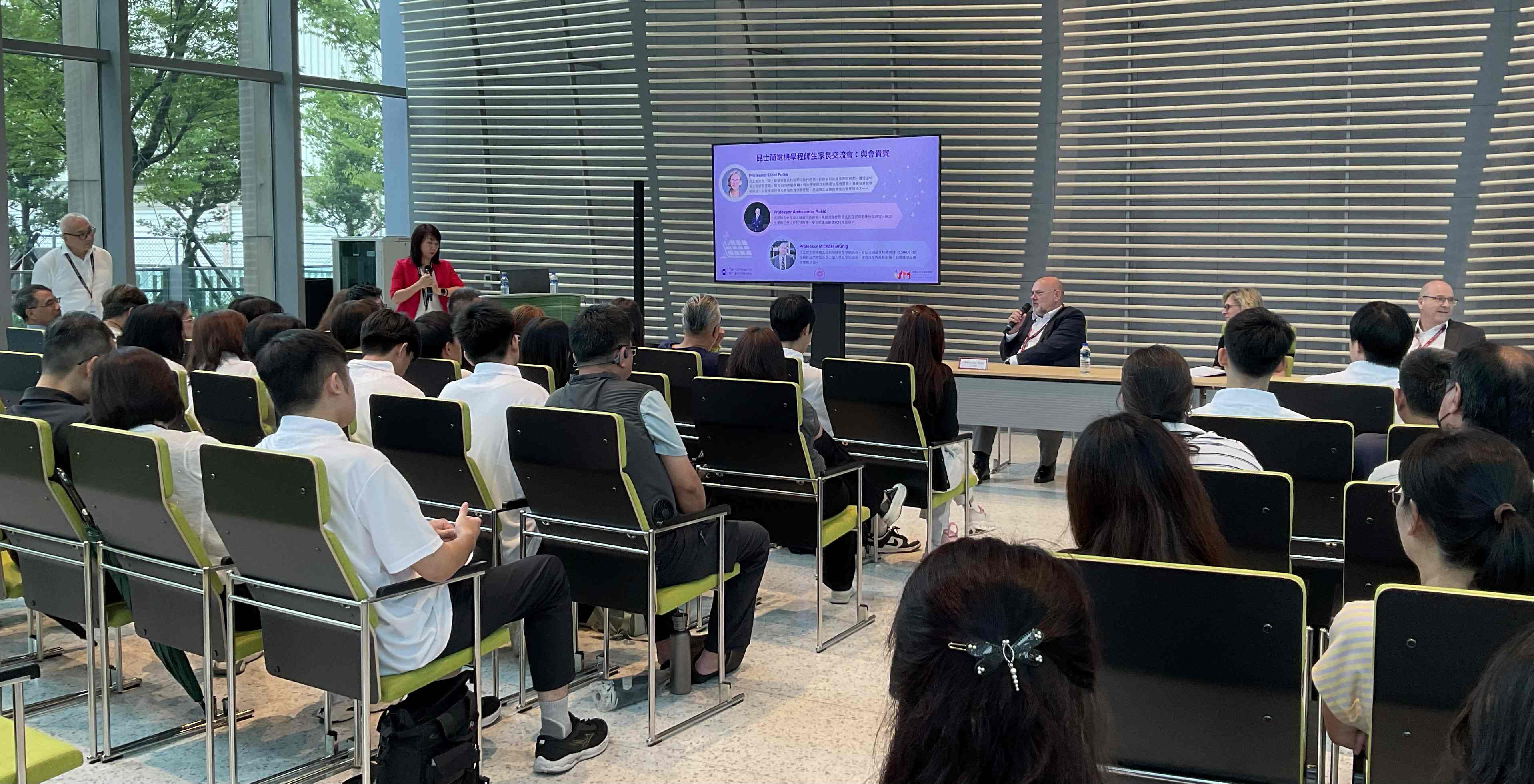
On September 3, a delegation from The University of Queensland (UQ), one of Australia's leading research-intensive universities, visited Feng Chia University to engage in face-to-face discussions with students and parents from the International School of Technology and Management's UQ Electrical Engineering(UQ-EE) Program. The event provided an opportunity to share information on academic resources, industry trends, and overseas study experiences. It also highlighted the long-standing partnership between the two institutions while giving students and their families direct access to university representatives as they prepare for future studies in Australia.
The visiting delegation included Executive Dean Liesl Folks of the Faculty of Engineering, Architecture and Information Technology, Associate Dean Aleksandar Rakić, Head of the School of Electrical Engineering and Computer Science Michael Brünig, and Senior Manager Angela Li for International Engagement. Upon arriving at ISTM, the delegation's first engagement was a meeting with students and parents from the UQ-EE Program. Through direct interaction, the guests sought to provide comprehensive information and help participants gain a clearer understanding of the academic and personal opportunities that await them in Australia.
The opening of the session was delivered by Senior Manager Angela Li, who introduced Brisbane, the vibrant capital city of Queensland, and highlighted the beautiful UQ campus and its learning environment. She also spoke about the university's iconic jacaranda trees, whose purple blossoms helped inspire the university's signature color. In addition to presenting campus life, she shared information about student clubs, cultural activities, and academic support services, giving both students and parents a more concrete picture of life at UQ.
During the question-and-answer session, UQ representatives responded to questions collected in advance from students and parents, as well as inquiries raised on site. One common concern was whether students entering UQ in their third year would be able to integrate smoothly into local campus life. In response, Associate Dean Aleksandar Rakić emphasized that UQ places great importance on intercultural engagement. Group projects and classroom activities are designed with the intention to bring together domestic and international students, encouraging meaningful interaction across cultures. He noted that the ability to communicate and collaborate with people from different backgrounds has become an essential skill in today's globalized world. Students were encouraged to step outside their comfort zones, expand their social circles, and embrace opportunities to build international friendships and networks.
Another topic of discussion focused on the rapid advancement of artificial intelligence(AI) and its impact on engineering education and future employment. Executive Dean Liesl Folks explained that UQ works closely with industry partners to ensure that its curriculum remains relevant to evolving workforce needs. According to industry feedback, employers are increasingly seeking graduates who can not only use AI tools but also understand, manage, and develop AI-enabled systems. To address these expectations, UQ continually reviews and updates its curriculum to incorporate emerging technologies and equip students with future-ready skills. She stressed that engineers play a fundamental role in solving real-world problems and that students who maintain curiosity, adaptability, and a commitment to innovation will continue to find abundant opportunities in the future.
Parents also raised questions about the technology industry landscape in Australia and how students can remain competitive in an increasingly interconnected global job market. Addressing these concerns, Michael Brünig, Head of the School of Electrical Engineering and Computer Science, noted that international mobility and collaboration are central features of today's technology sector. Strong English proficiency and an international outlook are therefore crucial advantages. While Australia is not yet a major semiconductor manufacturing hub, he pointed out that a growing number of multinational technology companies have established operations in the country, contributing to the development of the information technology sector. Drawing from his own experience of relocating from Germany to Australia, he encouraged students to embrace cultural diversity and develop global perspectives. Those who successfully adapt to new cultural environments, he explained, are often better prepared for international careers and cross-cultural collaboration.
As the event drew to a close, each representative offered words of encouragement to the students. Associate Dean Aleksandar Rakić urged them to pursue their passions and remain dedicated to learning. Senior Manager Angela Li encouraged students to actively engage with people from different cultural backgrounds and make the most of their overseas experience. Executive Dean Liesl Folks advised students to take the initiative in meeting new people, noting that a welcoming attitude can help build friendships and ease the challenges of adapting to a new environment. Michael Brünig reminded students to seek guidance whenever they encounter difficulties and to make full use of the university's support network and resources.
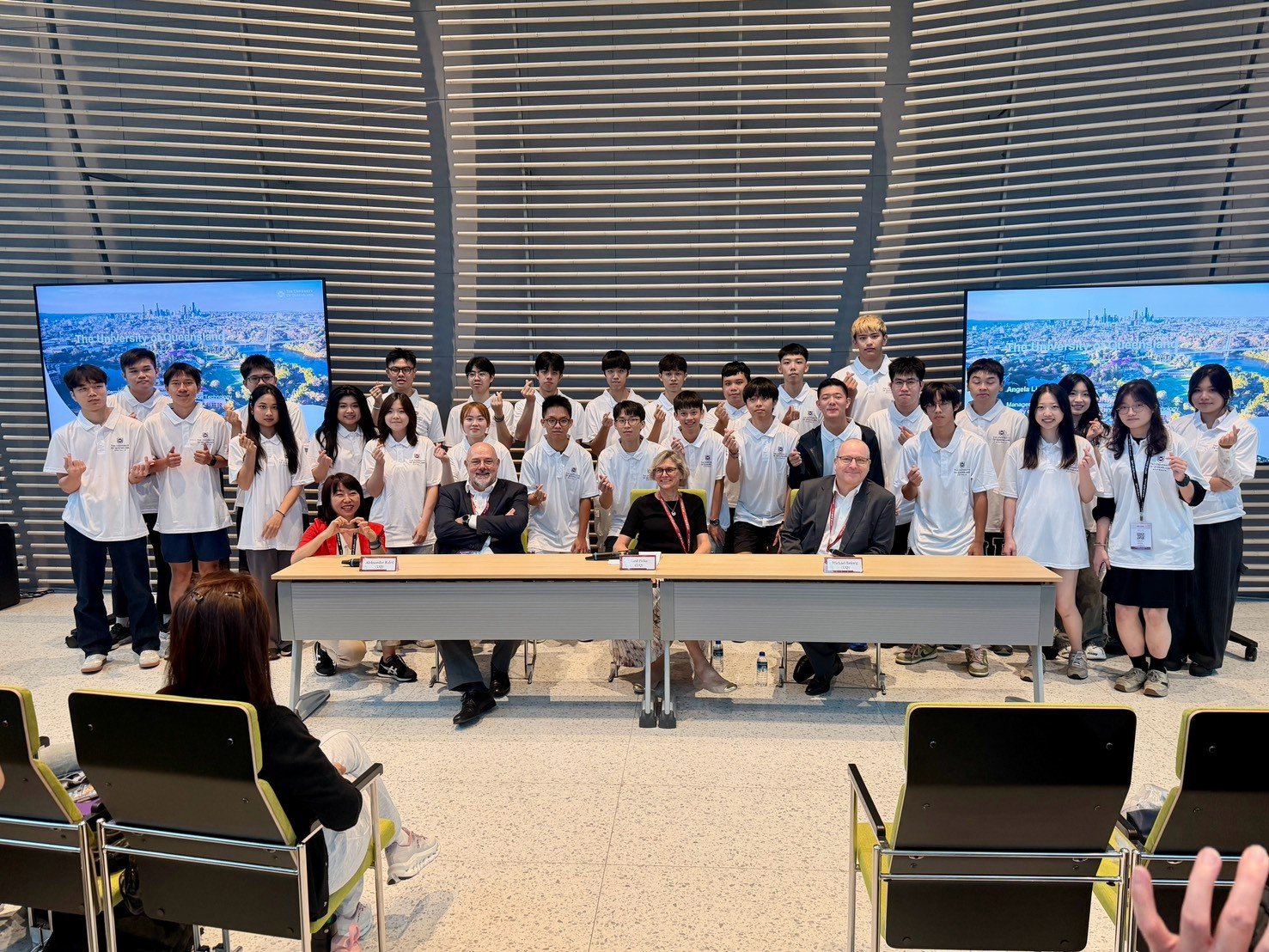
Following the discussion, students changed into commemorative UQ T-shirts presented by the university and gathered with the delegation for a group photograph, bringing the event to a warm conclusion. Through these personal interactions, students and parents gained a deeper understanding of the academic environment and opportunities available at UQ, while also experiencing the university's commitment to supporting students from ISTM. Moving forward, these institutions will continue to strengthen their partnership and work together to cultivate globally minded engineers and innovators equipped to thrive in an increasingly interconnected world.
Share: